

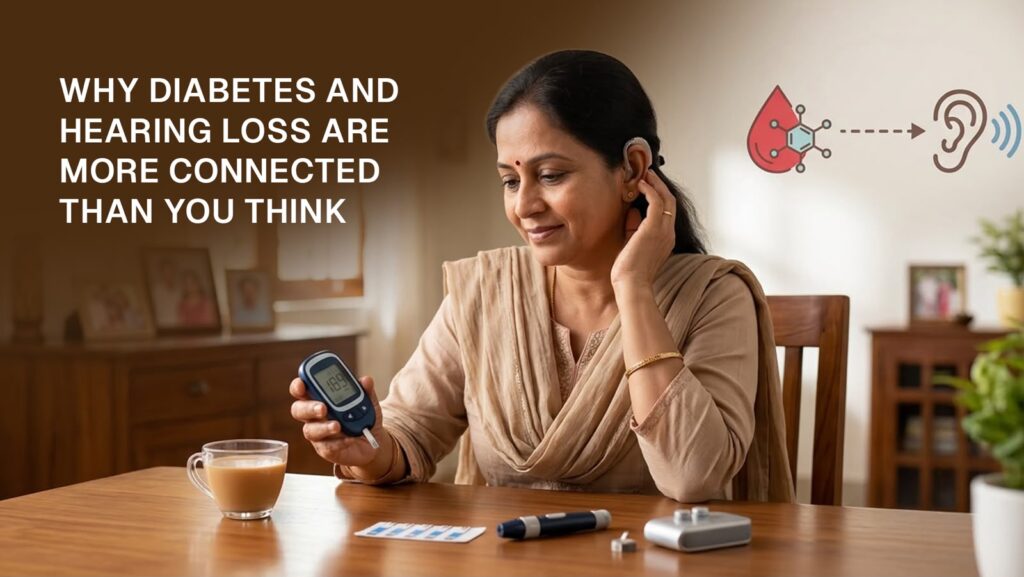
India is the diabetes capital of the world. With over 100 million people living with diabetes, the health consequences of this condition touch almost every family in Tamil Nadu, from Madurai to Coimbatore. Most people know diabetes can affect the eyes, kidneys, and heart. But one consequence that almost never gets discussed is hearing loss — and it is far more common than most doctors warn their patients about.
If you or someone in your family has been managing diabetes for years and has started to feel like conversations have become harder to follow, or that the TV needs to be turned up louder, this connection deserves your full attention.
The Biological Link Between Blood Sugar and Hearing
Sound travels into your ear and is converted into electrical signals by thousands of tiny hair cells inside the cochlea — the coiled, fluid-filled structure deep in your inner ear. These hair cells are extraordinarily delicate. They depend on a rich, consistent supply of blood and oxygen to function.
Diabetes damages small blood vessels all over the body — a process called microvascular damage. The tiny vessels that feed the cochlea are among the most vulnerable. When blood sugar levels remain elevated over months or years, those vessels narrow, harden, or leak. The hair cells begin to die. Unlike many other cells in the body, cochlear hair cells do not regenerate. Once they are gone, the hearing loss they cause is permanent.
Research published in the Annals of Internal Medicine found that people with diabetes are more than twice as likely to have hearing loss compared to non-diabetics. Even people with pre-diabetes — those with elevated blood sugar that has not yet crossed the clinical threshold — showed 30% higher rates of hearing impairment. This means hearing loss and diabetes are connected not just in advanced cases but from the very beginning of metabolic dysfunction.
How Diabetes-Related Hearing Loss Presents Differently
Diabetic hearing loss typically develops slowly and silently. It is a form of sensorineural hearing loss — meaning it originates in the inner ear or auditory nerve rather than the outer or middle ear. In its early stages, it most commonly affects the ability to hear high-frequency sounds. This explains why many diabetics begin to struggle specifically with understanding speech in noisy environments, distinguishing consonants like ‘s’ and ‘f’, hearing women’s and children’s voices clearly, or catching the full words in fast conversations.
Because the change is gradual, most people adapt unconsciously — leaning in more during conversations, avoiding crowded gatherings, asking people to repeat themselves. By the time the loss becomes undeniable, it is often already moderate in severity.
The Role of Neuropathy in Hearing Loss
Diabetes also causes neuropathy — nerve damage — throughout the body. The auditory nerve, which transmits sound signals from the cochlea to the brain, is not immune. Diabetic auditory neuropathy can cause a specific and particularly frustrating symptom: the ability to detect sounds remains relatively intact, but the clarity of what is heard degrades dramatically. Patients often say that they can hear people talking, but the words sound muffled or blurred, as if everyone is speaking with food in their mouth.
This symptom is frequently misunderstood and dismissed. A proper hearing evaluation by an audiologist — not just a general physician — is essential to correctly identify this pattern and recommend the right kind of support.
What Can Be Done: From Prevention to Treatment
The most powerful thing a diabetic person can do for their hearing is also the most powerful thing they can do for every organ in their body: maintain good blood sugar control. Consistent HbA1c management, regular exercise, proper diet, and medication adherence all slow or reduce the vascular and neural damage that leads to hearing impairment.
Beyond glycaemic control, diabetics should include annual hearing assessments as a routine part of their health check-up protocol — just as they include eye exams and kidney function tests. Early detection of hearing decline allows for early intervention, which produces far better outcomes.
When hearing loss is present, modern hearing aids are remarkably effective. Today’s devices are sophisticated enough to be programmed specifically to the audiometric profile of each person, amplifying the frequencies they struggle with while filtering background noise. For people with diabetic sensorineural hearing loss, the right hearing aid — properly fitted by a trained audiologist — can restore clarity, reduce social withdrawal, and significantly improve quality of life.
At Sounds Good, we see a significant number of patients who come to us after years of unaddressed hearing difficulty, only to discover through a comprehensive evaluation that their diabetic history was a major contributing factor. Getting checked is the essential first step. If you or someone you love is managing diabetes in Madurai, Coimbatore, Tirunelveli, Nagarcoil, or anywhere across Tamil Nadu, schedule a hearing assessment today. Your ears deserve the same care as your eyes and your heart.